Mutual Fund Application Forms Download Any Applications
Invest in Tax Saving Mutual Funds Invest Online
Infrastructure Bond Application Forms Download Applications

Tuesday, 27 February 2018

Best ELSS Funds for Growth

Best SIP Funds Online 


SIPs are when Stock Market is high volatile. Invest in Best Mutual Fund SIPs and get good returns over a period of time. Know Top SIP Funds to Invest Save Tax Get Rich

For further information on Top SIP Mutual Funds contact Save Tax Get Rich on 94 8300 8300

OR

You can write to us at

Invest [at] SaveTaxGetRich [dot] Com

Monday, 26 February 2018

Know about PF Withdrawal


Best SIP Funds Online 

PF Withdrawal


1) To encourage long-term savings, the government has formulated tax laws accordingly. If the withdrawal from a recognised PF happens after five years of continuous employment, it attracts no tax liability. In case of employment with different employers, if the PF balance maintained with the old employer is transferred to the PF account of the new employer, it is considered a continuous employment.

2) If an employee has been terminated because of certain reasons beyond his or her control (such as ill health and discontinuation of business of employer), the withdrawal does not attract any tax, irrespective of the number of years of employment.

3) In case of a withdrawal before five years, the amount becomes taxable in the same financial year. Thus, the amount has to be shown in your tax return for the next assessment year. The employer's contribution to PF and interest earned on it is added to one's income and taxed accordingly.

4) In addition, if you have claimed benefits under Section 80C on your own PF contribution, it will be taxed as salary. The interest earned on your own contribution will be taxed as 'income from other sources' and taxed according to the respective tax slabs.

5) TDS (tax deducted at source) - If the withdrawal is after a period of five years of continuous employment, it attracts no TDS or any tax. What happens if the period of service is less than five years? If PAN has not been submitted to the EPFO authorities, TDS is deducted at 30 per cent. If PAN has been submitted along with Form 15G/15H, no TDS is deducted. If form 15G/15H is not submitted and PAN is submitted, TDS @ 10% is deducted. Form 15H or 15G is meant to prevent TDS for those whose income falls below the taxable limit.

6)  Many people continue to maintain their EPF accounts even after they cease to be in jobs. They are no longer in jobs but EPF (employee provident fund) accounts continue to earn interest.  Income tax laws say that the interest accumulated in your EPF account after you quit the job is taxable. This was upheld in a ruling by Bangalore Income Tax Tribunal. "The ruling states that interest on EPF accumulated shall be taxable after the period when a person leaves employment and doesn't withdraw or get his/her EPF balance transferred with the new employer.

7) The Employees' Provident Fund Organisation has come out with a single-page form for provident fund related claims - from provident/pension fund withdrawal to the advance facility.

8) In addition, an Employees' Provident Fund Organisation or EPFO subscribers can submit the new one-page form directly to the retirement fund body without the employer's attestation if their accounts are seeded with Aadhaar and bank account details.

9) For subscribers who are yet to seed Aadhaar and bank details, a new composite claim form has been introduced which has to be submitted with attestation of employers for any claims.

10) Also, no other document would be required to be submitted by the subscriber for taking advances from the provident fund corpus. A provident fund subscriber can go for partial withdrawal/advance from his or her corpus for specific purposes like purchase of flat, construction, marriage/education of children etc. 


SIPs are when Stock Market is high volatile. Invest in Best Mutual Fund SIPs and get good returns over a period of time. Know Top SIP Funds to Invest Save Tax Get Rich

For further information on Top SIP Mutual Funds contact Save Tax Get Rich on 94 8300 8300

OR

You can write to us at

Invest [at] SaveTaxGetRich [dot] Com

Tata Ethical Fund

Best SIP Funds Online 


HOW HAS Tata Ethical Fund PERFORMED? 
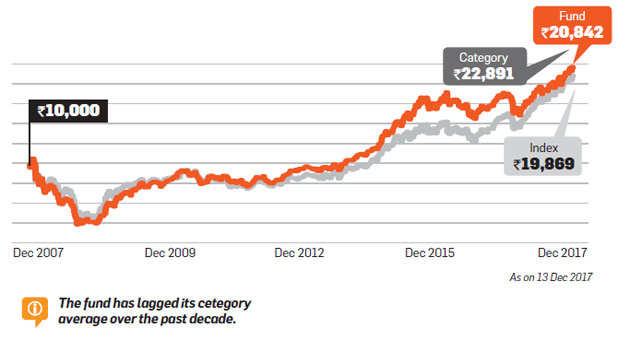
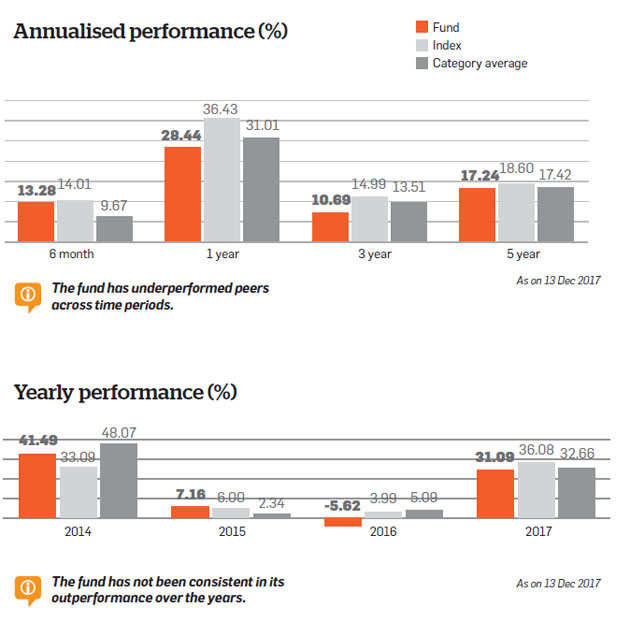
With a 10-year return of 7.62%, the fund has underperformed the category average (8.63%), while faring marginally better than the benchmark (7.11%). 
Tata Ethical Fund: An inconsistent performer

Tata Ethical Fund: An inconsistent performer

Category: Equity 
Type: Multi Cap 
Benchmark: Nifty-500 Shariah 


FUND MANAGER 
Pradeep Gokhale 
Tenure: 5 years and 10 months 
Education: B.com (H), CA and CFA 
Tata Ethical Fund: An inconsistent performer

Tata Ethical Fund: An inconsistent performer

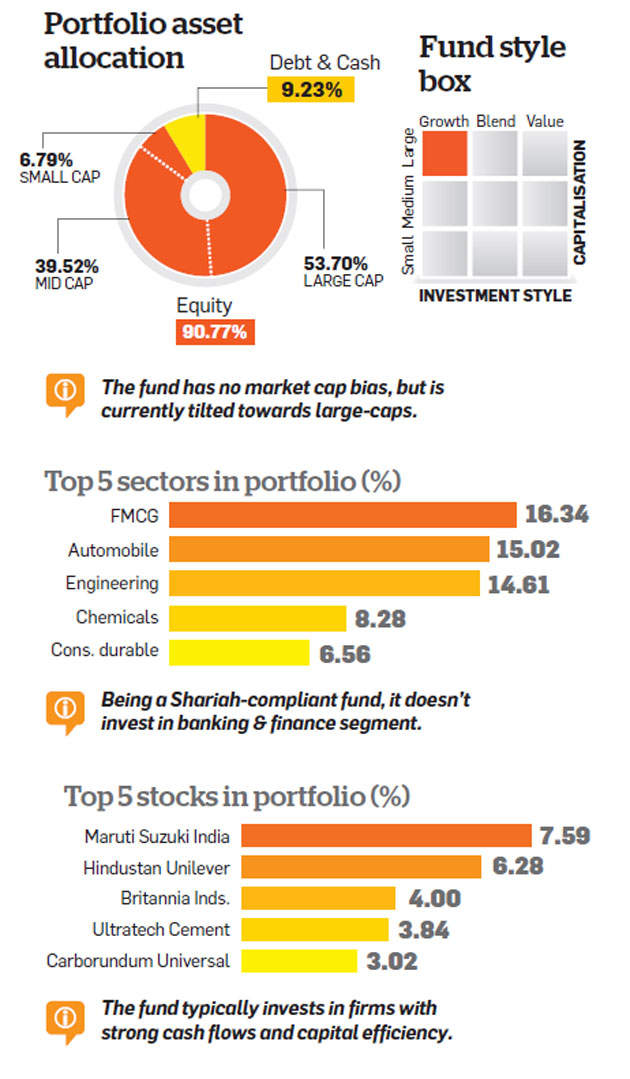
Being a Shariah-law compliant fund, this scheme stays away from the banking and finance sector and avoids some of the 'sin' sectors like alcohol, armaments, and even hospitality, among others. It doesn't have any market-cap bias, but currently its tilted towards large-caps. 

It has raised exposure to the midcap segment in recent months, resulting in lower portfolio market cap relative to peers. The fund prefers companies with high capital efficiency, low leverage and high cash generation ability. 

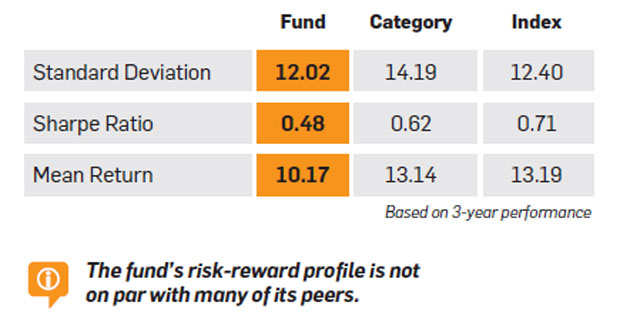
The portfolio is reasonably diversified, with the fund manager taking aggressive positions in the top picks. The fund's performance has been inconsistent over the years. This fund is purely for investors looking for the 'ethical' investing approach and not keen on investing in funds skewed towards banking and finance firms. 


SIPs are when Stock Market is high volatile. Invest in Best Mutual Fund SIPs and get good returns over a period of time. Know Top SIP Funds to Invest Save Tax Get Rich

For further information on Top SIP Mutual Funds contact Save Tax Get Rich on 94 8300 8300

OR

You can write to us at

Invest [at] SaveTaxGetRich [dot] Com

Tax Saving options other than Section 80C to save money

Best SIP Funds Online 


While you may have made investments to claim deduction under Section 80C of the Income Tax Act, there are various payments, investments which are available as deduction against an individual's taxable income.

It is your duty to pay tax to the government, but overpaying taxes is not wise. While you may have, for instance, made investments to claim deduction under Section 80C of the Income Tax Act, there are various payments / investments which are available as deduction against an individual's taxable income. A few are mentioned below:

1. Deduction towards rent paid for accommodation provided is available, subject to conditions.

For salaried individuals, an exemption for the rent paid is allowed being the least of the following:

# actual HRA received,

# actual rent paid as reduced by 10% of basic pay, or

# 40% / 50% of the basic pay (depending on the location of accommodation)

For non-salaried individuals, a deduction is allowed being the least of following (subject to conditions)

# Rs 60,000,

# actual rent paid as reduced by 10% of total income, or 25% of total income.

2. Payment towards medical insurance premium up to Rs 25,000 for self, spouse and dependent children and up to Rs 25,000 for parents is allowed as a deduction. In case of senior citizens, the limit is extended to Rs 30,000.

3. In case an individual is a salaried employee, reimbursement towards medical expenses of up to Rs 15,000 is available for exemption.

4. Deduction is allowed for interest paid on education loan taken for higher education subject to conditions. The deduction is allowed for eight years or till the loan is repaid, whichever is earlier.

5. Interest payments on loan taken for purchase of property are allowed up to Rs 200,000 for self-occupied property, while there is no limit for deduction in case of let-out properties. However, in case of let-out properties, loss of only up to Rs 200,000 is available for set-off in the same year and the balance needs to be carried forward for set-off against income from house property (up to the next 8 years).

6. Donations to a notified organization / fund are available as deduction up to 50%-100% of the donations made depending on the type of organization / fund.

Certain investments which can also be considered as deductions are listed below:

7. Where an individual has earned long-term capital gains, and the gains are invested in REC / NHAI / other notified bonds (up to Rs 50 lakh) within a duration of six months of the sale, such gains can be exempt.

8. Where an individual earns the long-term capital gains on transfer of residential house property and reinvests the same to purchase / construct another residential house property, an exemption of such gains is available subject to conditions.

9. Similarly, where sale proceeds of long-term capital assets (other than house property) are reinvested to purchase / construct a house property, an exemption is available subject to specified conditions.

10. Where an individual makes a contribution towards National Pension Scheme, an additional benefit of Rs 50,000 is available.


SIPs are when Stock Market is high volatile. Invest in Best Mutual Fund SIPs and get good returns over a period of time. Know Top SIP Funds to Invest Save Tax Get Rich

For further information on Top SIP Mutual Funds contact Save Tax Get Rich on 94 8300 8300

OR

You can write to us at

Invest [at] SaveTaxGetRich [dot] Com

How to withdraw PF and EPS money

Best SIP Funds to Invest Online 


After resigning from a job many individuals do not get their provident fund (PF) transferred from the previous employer to the new employer.

People do this mainly because the funds are safe with the Employees' Provident Fund Organisation (EPFO) and it keeps earning tax-free returns.

Things, however, will not be the same from now on. In November 2017, the Bengaluru bench of the Income-Tax Appellate Tribunal (ITAT) ruled out tax-exemption on the interest earned after an employee has quit. So, to avoid getting taxed, you will have to either transfer the PF balance to the new employer or withdraw the amount at the earliest after the exit.

After an exit from a job, even though no fresh contributions are made, such PF accounts remain 'operative' with the balance earning interest every year. The PF balance as on the date of exit from an organisation continues to be tax-exempt but interest earned on the balance thereafter will be taxable in the year of withdrawal, i.e., it's only the amount of interest earned during the out-of-job period which comes into the tax net. So, to avoid tax, one should get the PF balance transferred to the new employer.

If such a case pertains to you, you have two options: continue earning taxable interest or withdraw the PF balance. Let's see how you can withdraw the PF balance.
When can an employee withdraw PF balance?
According to the EPF Act, to claim final PF settlement, one has to retire from service after attaining 58 years of age. The total PF balance includes the employee's contribution and that of the employer, along with the accrued interest. In addition, he will be eligible to get the Employees' Pension Scheme (EPS) amount as well depending on the years of service.

But what if someone decides to quit his job before reaching 58? Under the existing rule, employees who resign from a job before they turn 58 years of age can withdraw the full PF balance (and the EPS amount depending on the years of service), if he is out of employment for 60 straight days (two months) or more after leaving a job and then withdraw.

Along with the PF, one is also allowed to withdraw the EPS amount if the service period has been less than 10 years and not later on. Once this milestone is crossed, the employee compulsorily gets pension benefits after retirement.

To withdraw the PF balance and the EPS amount, the EPFO has launched a 'composite form' to take care of withdrawals, transfer, advances, and other related payments.

Before you start the withdrawal process make sure all your previous PF accounts are merged into one. The total service in the present establishment as well as previous organisations will be taken into account and therefore, it is advisable to merge your accounts.

To merge all previous PF accounts, you may click here.

The withdrawal process
The withdrawal process becomes simpler and less time-consuming if you have your Aadhaar number with you. Here is how you can initiate the withdrawal for both, with and without Aadhaar.

Withdrawing without using Aadhaar card number: If you don't have an Aadhaar, but have the PF number, use this form – Composite Claim Form (Non-Aadhaar).

You will have to furnish Permanent Account Number (PAN) if the total service period is less than five years and also attach two copies of Form 15G/15H, if applicable. In case the Universal Account Number (UAN) is not available, you can mention only the PF account number.

Withdrawing using Aadhaar card number: You can submit a Composite Claim Form (Aadhaar) directly to the concerned EPFO office without attestation of claim form by the employers. The payment of the PF balance will be sent to your bank account, so attach a cancelled cheque along with the form.

Before proceeding ensure these things: You have submitted complete details in Form11 (New) to your employer, Aadhaar card number and bank account details are available on the

are available on the UAN portal, and the UAN has been activated.

The withdrawal process will entail these conditions. See which one caters to you and choose the form accordingly.


1. Withdrawing PF balance plus EPS amount (for below 10 years of service)
2 . Withdrawing PF balance plus EPS amount (over 10 years of service)
3. Withdrawing PF balance only and reduced pension (age 50-58; over 10 years of service)
4. Withdrawing PF balance only and full pension (After 58)

1. Withdrawing PF balance plus EPS amount (for below ten years of service)
If service period has been less than 10 years, both PF balance and the EPS amount will be paid. To get EPS amount, in the Composite Claim Form (Aadhaar or Non-Aadhaar), along with choosing 'Final PF balance', also choose the 'pension withdrawal' option.

If you plan on re-joining the workforce, you may opt to get the 'scheme certificate' by furnishing
Form 10C.

2. Withdrawing PF balance plus EPS amount (over ten years of service)
If you have already completed 10 years of service, the EPS amount cannot be withdrawn and only the scheme certificate is to be issued by filling Form 10C along with the Composite Claim Form (Aadhaar or Non-Aadhaar). Pension is to be paid from age 58 while a reduced pension can be paid from age 50. One may opt for early pension (reduced proportionately) after 50 years, provided one has completed 10 years of service.

3. Withdrawing PF balance and reduced pension (age 50-58) (over ten years of service)
You can only get pension after turning 50 years of age and have rendered at least 10 years of service. If your service period has been more than 10 years and you are between the age of 50 and 58, you may opt for reduced pension. For this,
Form 10D
has to be submitted along with the Composite Claim Form (Aadhaar or Non-Aadhaar).

4. Withdrawing PF balance and full pension (After 58)
After 58, you have to submit the same
Form 10D
to claim the full pension.


What you should do
It is advisable to transfer your PF balance when you change jobs as it is a form of forced savings. For those who are still in service and have not started their own business, it is better to transfer the PF balance to the new employer. The transfer process has been made automatic, 


to know about it. And if you have quit to start your own business, the entire balance in your EPF account can be transferred to the National Pension Scheme.


SIPs are Best Investments when Stock Market is high volatile. Invest in Best Mutual Fund SIPs and get good returns over a period of time. Know Top SIP Funds to Invest Save Tax Get Rich

For further information on Top SIP Mutual Funds contact Save Tax Get Rich on 94 8300 8300

OR

You can write to us at

Invest [at] SaveTaxGetRich [dot] Com

Mutual Fund Application Forms Download Any Applications
Invest in Tax Saving Mutual Funds Invest Online
Infrastructure Bond Application Forms Download Applications

Popular Posts